Penny Lapenna
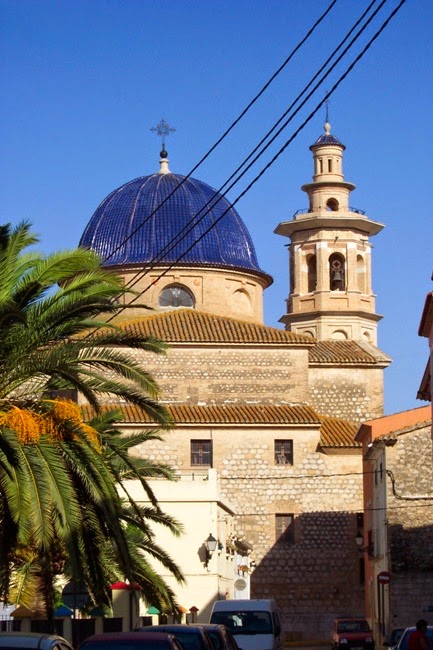
JALÓN IS AS FAMOUS for its flea market (known as the Rastro) as for its gently undulating streets, blue-domed neo-classical church, and the green vistas of vineyards, oranges, almonds and olive groves. But what you may not know is how the town came to have such a famous antiques market nestled at its heart every Saturday morning, or some of the amazing finds discovered among the old attic clutter.
Salvador Martinez is a local Benissa businessman, currently working on a building project in the village of Castells de Castells at the head of the Jalon Valley, (www.la-vall.com) and also promoting his antique business and shop – Antiques Martinez. However, he was also instrumental in bringing the rastro from its place of origin in Benissa in 1991.
Growing up as the son of a watchmaker, Salvador often picked through the flotsam and jetsam of antique markets to locate cogs and wheels for watch interiors, gaining a love of the rastro life of haggling, bargaining and discovering hidden treasures. As an adult he trained for five years under a famous gemologist, but to earn a living he bought and sold whatever he could lay his hands on, even resorting to selling the rubbish other people throw out. He would traverse the valley, stopping at community refuse sites, and collect old chairs, bedposts, plant pots, cracked vases, paintings, picture frames and the like.
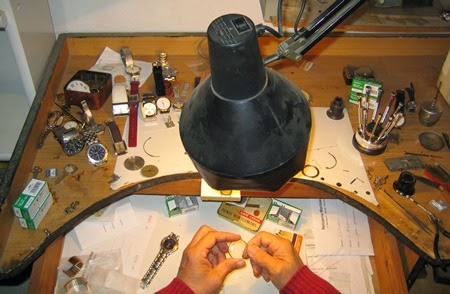
“Do you realise I made up to 36,000 euros in 2002 just from refuse?” he grins.
When Salvador persuaded individuals to move their stalls from an existing market in Benissa to a site alongside Jalon’s river, he encouraged traders from all over Spain to make it a flourishing site, which some considered one of the best flea-markets in Spain. However, the rastro has become a very different entity. He believes that the local Town Hall is not making the most of it, for its tourist potential, but also for its reputation among real antique dealers.

“I used to ring dealers in Sevilla and Granada to get them here, and they agreed that the Jalon rastro was the best of its kind. People made a great deal of money every Saturday. I once heard a story of an antique book changing hands for six million pesetas (36.000 euros), and the dealer claimed he could sell it on for double that amount at a specialist fair in Madrid! We are talking serious antiques. But there is no future for the rastro unless it is profitable.”
Salvador explains that he sees the market like a tree whose roots cannot grow on stone. But he has a wealth of ideas for re-generating the whole area, to benefit all the local residents, including the Town Hall.
“We must separate to improve. There is already a Tuesday market that sells vegetables and cheap clothing. This type of stall does not bring real profit to Jalon, only to the few businessmen who sell inferior goods cheaply. The rastro must charge an entrance fee and only proper antique dealers or those with genuine second-hand items would be allowed. The Town Hall must resolve the parking issues, and issue licenses to those who provide space on their land, and charge suitable amounts. When people know that the rastro is where the real experts trade, it will be profitable once more, and when traders come from the big cities, they will stay in Jalon’s hotels and restaurants and use our banks and services and the town will thrive once more. Without this, it will die.”
Many ex-pat’s also contributed to the growth of the rastro as we know it. Although the original stallholders were all local Spaniards, it was quickly a multi-national market as the Brits, Germans, and Dutch set up stalls, trading in everything from household goods, old paintings and antiques to pot-plants, home-made soap, original paintings, second-hand clothes and locally made produce. Before long the market extended out from the convenient shade of the trees along the length of the riverbank, and its popularity increased tourism in the village as coach loads of visitors arrived from Benidorm, Alicante and Denia to browse the market and enjoy wine from the nearby bodegas.
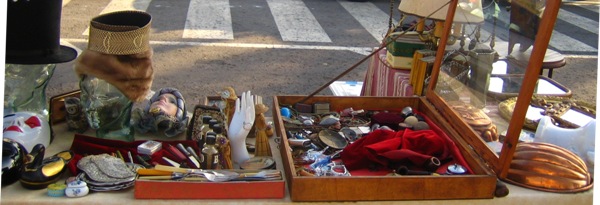
The rastro seemed to encapsulate the taste of authentic Spain. Among the old bedsteads, church pews, and religious iconography, posters of bullfighting heroes, cracked tiles, tattered books, rusting metal toys and tools of a bygone era was the Spain described by Hemingway and Orwell. The stallholders were eccentric individuals too - bespectacled antique experts, swarthy Latin gypsies and oddball hippies. People browsed goods scattered on dusty rugs and makeshift tables. This was a flea market of the sort held in London, Paris and Madrid, where part of the pleasure was rubbing shoulders with a cornucopia of strange characters, hoping to find a worthwhile trinket among the detritus on display.
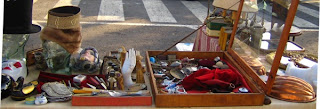
Nowadays, the market has lost some of its charm as the stalls fill up with cheap trashy European goods sold in bulk, pirate DVD’s and fake Chanel bags.
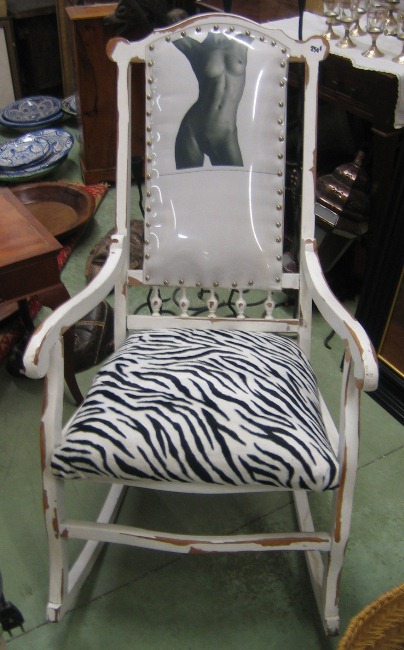
However, some of the original stall-holders are there and many Spanish families still rely upon the rastro for their living. There are pitches selling bizarre and gaudy items from old Spanish homes, or that display worn window frames, doors and ironwork removed from old buildings before they are torn down, and authentic pots, tools, keys and bric-a-brac that will soon grace renovated townhouses, rural B&B’s and restaurants in the valley.
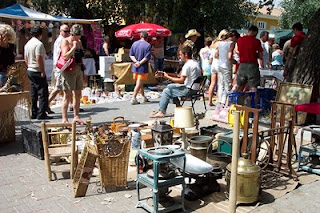
In fact, I will always have a soft spot for the rastro since our front door in Parcent is a reclaimed wreck from an old Spanish restaurant, and my bedroom window frame with its crooked handle came from a local convent. Being able to chat to the stallholder over a cortado, I wasn’t just buying second-hand goods; I was able to discover the history of the items that are now part of my home. The rastro guy spoke knowledgably about how to care for the wood, and the importance of using strong hinges and appropriate fittings so that the door would last. Every autumn when I clean and varnish the wood and re-paint the worn metal recce bars, I think of buying the door at the rastro, and how I infinitely prefer the preserved look of our house. Of course, it lets in draughts and has uneven sections where the wood has been repaired, and it won’t last forever, but that’s all part of its charm.
I would hate to see the rastro go the way of much of the region, taken over by thrusting businessmen just interested in making a quick profit. While we still have this quirky treasure on our doorsteps, get out and enjoy it, and just maybe the local Town Hall will instigate measures to preserve its character too.
Thanks to Salvador Martinez for the information on the origins of the rastro. Salvador can be found at his antiques emporium in Avenida Valencia, El Verger Poligono Industrial (norte), El Verger and at: www.antiquesmartinez.wordpress.com. Details of his latest building projects in inland, mountain village Castell de Castells and other properties available for sale in the Alicante province can be found at: www.alicanteproperty.wordpress.com.
By Penny Lapenna - Xaló is Different - May 2003
(Re-posted to Blogspot)